
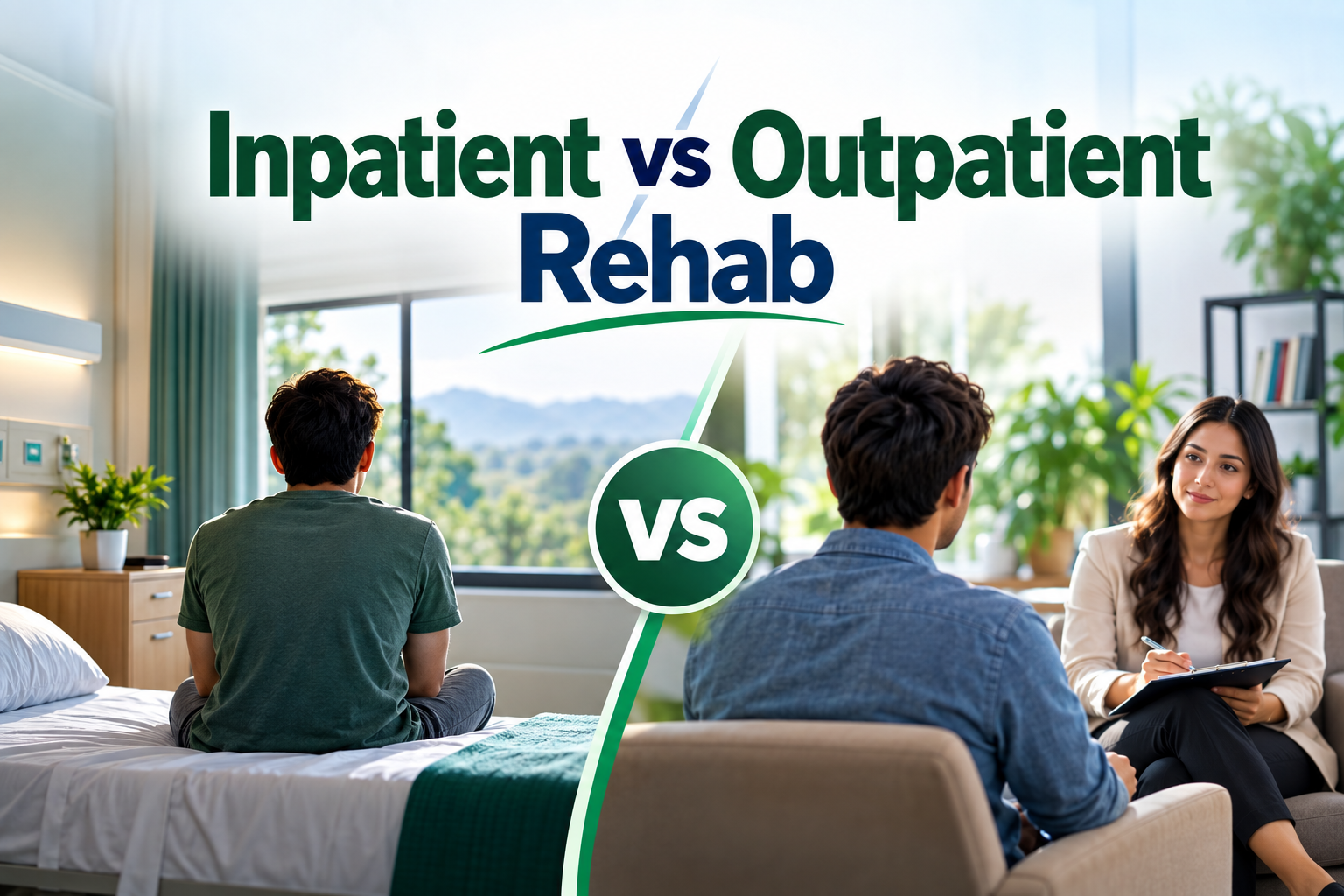
Choosing the right rehab program is an important decision for anyone struggling with drug addiction, alcohol dependency, or related mental health challenges. One of the most common questions people have is: Should I choose inpatient rehab or outpatient rehab?
The answer depends on several factors, including the severity of the addiction, withdrawal risks, medical and psychological needs, home environment, daily responsibilities, and the level of support available outside treatment.
Inpatient rehab generally involves staying at a treatment facility while receiving structured care and supervision. Outpatient rehab, on the other hand, allows a person to live at home while attending scheduled treatment sessions. SAMHSA describes outpatient care as treatment where the patient attends appointments and leaves the same day, while inpatient care involves staying overnight for treatment.
There is no single treatment option that is right for everyone. A professional assessment can help determine which level of care is appropriate for an individual’s condition and recovery goals.
What Is Inpatient Rehab?
Inpatient rehab is a structured treatment program where a person stays at a rehabilitation facility while receiving ongoing clinical and therapeutic support.
Because the patient remains at the facility, inpatient treatment can provide a more controlled environment away from substances, unhealthy routines, and potentially harmful triggers.
Inpatient treatment may include:
- Medical assessment
- Supervised withdrawal or detoxification when clinically appropriate
- Individual counseling
- Group therapy
- Family counseling
- Psychiatric support
- Addiction education
- Relapse-prevention planning
- Structured daily routines
- Recovery and aftercare planning
The exact services vary between facilities and according to the patient’s clinical needs.
For people who need continuous monitoring or a highly structured environment, inpatient or residential treatment may provide a level of support that is difficult to achieve through standard outpatient appointments. SAMHSA notes that residential and inpatient services can provide structured, continuous care for people with more significant substance-use or health needs.
What Is Outpatient Rehab?
Outpatient rehab allows a person to receive treatment without staying at the facility overnight.
Instead, the patient attends scheduled appointments or treatment sessions and returns home afterward.
Depending on the program, outpatient treatment can involve:
- Individual therapy
- Group counseling
- Addiction counseling
- Psychiatric care
- Medication management when appropriate
- Family support
- Relapse-prevention education
- Recovery planning
- Regular follow-up appointments
Outpatient treatment can be suitable for people whose clinical needs can be safely managed without 24-hour residential care.
SAMHSA explains that outpatient treatment can range from standard appointments to more intensive outpatient or partial-hospitalization programs, which may involve several hours of treatment during the day.
Inpatient vs Outpatient Rehab: Key Differences
Understanding the differences between these two approaches can make the decision easier.
1. Living Arrangements
The biggest difference is where the patient stays during treatment.
With inpatient rehab, the patient stays at the treatment facility. This provides a structured environment where treatment and support can be available throughout the day.
With outpatient rehab, the patient continues living at home and visits the facility according to a scheduled treatment plan.
2. Level of Supervision
Inpatient programs generally provide a higher level of supervision because the patient remains at the facility.
This can be particularly important when someone requires close observation during certain stages of treatment.
Outpatient treatment provides regular professional support, but the patient spends most of the time outside the treatment setting.
3. Daily Routine
Inpatient rehab usually provides a structured daily schedule. A typical day may include therapy, counseling, recovery education, meals, rest, and other planned activities.
Outpatient programs provide more flexibility. Patients may continue working, attending school, or managing family responsibilities while participating in treatment.
4. Exposure to Triggers
People recovering from addiction may encounter triggers in their normal environment, including certain people, places, routines, or stressful situations.
Inpatient rehab can temporarily remove a person from many of these external triggers.
Outpatient rehab requires the individual to practice recovery skills while continuing to live in their usual environment.
5. Flexibility
Outpatient treatment generally provides more flexibility because the patient does not have to stay at the facility.
This may make it easier for some people to continue employment, education, or family responsibilities.
Inpatient treatment requires a greater time commitment because the person lives at the treatment facility during the program.
Who May Benefit From Inpatient Rehab?
Inpatient treatment may be considered when someone needs a highly structured environment or more continuous clinical support.
Factors that may lead a treatment professional to consider inpatient or residential care include:
- Significant substance dependence
- Repeated relapse
- Difficulty maintaining sobriety at home
- An unsafe or unstable home environment
- Serious withdrawal concerns
- Co-occurring mental health conditions
- Need for continuous observation
- Lack of reliable support at home
- Previous unsuccessful attempts at less intensive treatment
This does not mean that everyone with an addiction needs inpatient treatment. The appropriate level of care should be determined through an individualized clinical assessment.
At Healing Door Rehab & Psychiatric Center in Islamabad, treatment planning begins with an assessment of physical, mental, behavioral, and addiction-related needs. The center states that treatment plans are developed according to each patient’s condition and recovery goals.
Who May Benefit From Outpatient Rehab?
Outpatient rehab may be appropriate for people who can safely participate in scheduled treatment while continuing to live at home.
It may be considered when:
- The addiction is manageable without 24-hour residential care
- The person has a stable and supportive home environment
- The individual can attend appointments consistently
- There are no immediate safety concerns requiring continuous monitoring
- The person can avoid or manage substance-related triggers
- Work, education, or family responsibilities make residential treatment difficult
- Ongoing therapy and counseling can meet the person’s clinical needs
Outpatient treatment can also play an important role after a more intensive treatment program, depending on the individual’s recovery plan.
What About Detox?
Detoxification and rehabilitation are related but are not exactly the same thing.
Detoxification focuses on helping the body manage withdrawal from alcohol or drugs. Rehabilitation addresses the broader behavioral, psychological, social, and recovery-related aspects of addiction.
SAMHSA explains that detoxification is not the same as complete addiction treatment; it can be an initial step before further treatment.
Some people may need medically supervised detoxification, particularly when withdrawal can create significant medical risks.
Healing Door provides medically supervised detoxification when clinically needed, followed by further treatment according to the patient’s individual requirements.
Anyone considering detox should speak with a qualified healthcare professional rather than attempting to manage potentially dangerous withdrawal symptoms alone.
Inpatient vs Outpatient Rehab for Drug Addiction
Drug addiction can affect physical health, mental health, relationships, work, education, and everyday life.
The appropriate treatment setting depends on the type and severity of substance use and the person’s overall circumstances.
For someone experiencing significant drug dependence, repeated relapse, or difficulty remaining safe and stable outside a structured setting, inpatient treatment may be considered.
For someone who is medically and psychologically stable enough to attend regular sessions while living at home, outpatient treatment may be an option.
Healing Door’s drug addiction treatment program includes assessment, treatment planning, detoxification when needed, therapy, recovery planning, and aftercare according to individual treatment needs.
Inpatient vs Outpatient Rehab for Alcohol Addiction
Alcohol addiction requires careful consideration because withdrawal can sometimes become medically serious.
The appropriate treatment approach depends on the individual’s alcohol use, withdrawal history, medical condition, mental health, and other factors.
Some people may require a higher level of medical supervision, while others may receive treatment through an outpatient program.
Healing Door offers alcohol addiction treatment that may include assessment, medically supervised withdrawal management, therapy, relapse-prevention planning, and family support when appropriate.
A professional evaluation is important before deciding whether outpatient or inpatient care is appropriate.
The Role of Mental Health in Rehab
Addiction and mental health conditions can sometimes occur together. A person may experience anxiety, depression, trauma-related symptoms, mood disorders, or other psychological difficulties alongside substance use.
When these conditions occur together, treatment may need to address both issues.
This is sometimes referred to as treatment for co-occurring or dual conditions.
A rehab program may therefore involve both addiction specialists and mental health professionals. Healing Door describes its clinical team as including psychiatrists, psychologists, therapists, medical professionals, and addiction-care specialists.
You can learn more about psychiatric treatment at Healing Door if mental health concerns are also part of the situation.
Can Outpatient Rehab Be as Effective as Inpatient Rehab?
The goal should not be to determine which program is universally “better.”
Instead, the important question is:
Which level of care matches the person’s clinical needs and circumstances?
For someone who needs continuous monitoring and a structured environment, outpatient care may not provide enough support.
For someone who is stable, has a supportive environment, and can consistently attend treatment, inpatient care may provide more structure than necessary.
SAMHSA recognizes multiple levels of treatment, including outpatient, intensive outpatient, inpatient, and residential care. The appropriate level depends on individual treatment needs.
Benefits of Inpatient Rehab
Some potential advantages of inpatient rehab include:
Structured Environment
A structured environment can help establish a consistent daily routine and reduce exposure to immediate substance-related triggers.
Continuous Support
Patients remain within the treatment environment, allowing for closer observation and ongoing support.
Separation From High-Risk Situations
Temporarily stepping away from certain people, places, or routines may help a person focus on recovery.
Intensive Therapy
Inpatient programs can provide opportunities for regular therapy, counseling, education, and recovery activities.
Focus on Recovery
Because patients stay at the facility, they may have fewer everyday responsibilities competing for their attention during treatment.
Benefits of Outpatient Rehab
Outpatient treatment also offers several potential advantages.
Greater Flexibility
Patients can often continue working, studying, or caring for family while attending treatment.
Living at Home
The individual remains connected to their home and community environment.
Practicing Recovery Skills
Outpatient treatment allows people to practice coping and relapse-prevention skills in their everyday lives.
Continued Family Connection
Depending on the treatment plan, patients may be able to maintain regular contact with family members and other supportive people.
Step-Down Care
Outpatient treatment can sometimes be used as part of continuing care after a more intensive treatment program.
Questions to Ask Before Choosing a Rehab Program
Before selecting a treatment program, consider asking:
- What level of care does the patient need?
- Is medical detoxification required?
- Are there mental health conditions that also need treatment?
- Does the facility provide individualized treatment plans?
- What type of therapy is available?
- Is family counseling offered?
- How does the program handle relapse prevention?
- What happens after the main treatment program ends?
- Are qualified healthcare professionals involved?
- Is the facility licensed or appropriately accredited?
- What are the costs and payment arrangements?
- How can family members participate in the recovery process?
SAMHSA recommends looking for licensed and accredited programs, evidence-based treatment approaches, appropriate professional support, and services that address the patient’s broader needs.
Why Individualized Treatment Matters
Addiction does not affect every person in the same way.
Two people may use the same substance but have completely different medical histories, family environments, psychological needs, and recovery goals.
That is why choosing a treatment setting should involve more than simply asking whether inpatient or outpatient rehab is better.
A professional assessment can help identify:
- Substance use patterns
- Physical health concerns
- Mental health needs
- Withdrawal risks
- Previous treatment history
- Relapse patterns
- Family and social support
- Home environment
- Recovery goals
Healing Door emphasizes individualized treatment plans based on assessment results and the patient’s clinical needs. Its treatment process includes assessment, personalized planning, medically supervised detoxification when needed, therapy and counseling, relapse prevention, and aftercare.
Inpatient vs Outpatient Rehab: A Simple Comparison
| Feature | Inpatient Rehab | Outpatient Rehab |
|---|---|---|
| Living arrangement | Stay at treatment facility | Live at home |
| Supervision | Higher level of continuous support | Scheduled professional support |
| Daily structure | Highly structured | More flexible |
| Home responsibilities | Temporarily reduced | Usually continue |
| Exposure to home triggers | Lower during treatment | May continue |
| Flexibility | Lower | Higher |
| Therapy | Regular/intensive depending on program | Scheduled sessions |
| Suitable for | People needing greater structure/support | People able to safely participate while living at home |
This comparison is a general guide. A healthcare professional should determine the appropriate level of care based on an individual assessment.
What Happens After Rehab?
Recovery does not necessarily end when the primary treatment program finishes.
Continuing support can be an important part of maintaining progress.
Aftercare may include:
- Follow-up therapy
- Family support
- Relapse-prevention planning
- Support groups
- Continued psychiatric care when needed
- Recovery counseling
- Regular check-ins
- Healthy lifestyle changes
- Ongoing community support
Healing Door states that its recovery approach can include therapy, family support, relapse-prevention strategies, and aftercare following treatment.
How to Decide Between Inpatient and Outpatient Rehab
If you are unsure which option is appropriate, start with a professional assessment instead of choosing solely based on convenience or cost.
Consider the person’s:
Medical needs: Are there withdrawal or health concerns requiring closer monitoring?
Addiction severity: How frequently is the substance being used, and how difficult has it been to stop?
Mental health: Are there psychological or psychiatric conditions that also require treatment?
Home environment: Is the home safe, stable, and supportive of recovery?
Relapse history: Has the person repeatedly returned to substance use after attempting to stop?
Support system: Are reliable family members or other supportive people available?
Daily responsibilities: Can the person realistically attend outpatient appointments consistently?
The answers can help a treatment professional determine whether inpatient, outpatient, intensive outpatient, residential, or another level of care is appropriate.
Get Professional Guidance for Rehab Treatment
Choosing between inpatient and outpatient rehab is an important decision, but you do not have to make it without professional guidance.
The right treatment plan depends on the person’s health, addiction history, mental health, support system, and recovery needs.
If you or someone in your family is struggling with drug addiction, alcohol dependency, or related mental health challenges, consider speaking with a qualified treatment professional for an assessment.
Healing Door Rehab & Psychiatric Center in Islamabad provides individualized addiction and mental health treatment, including assessment, detoxification when needed, therapy, relapse-prevention support, and aftercare.
You can contact Healing Door Rehab for a confidential consultation to discuss treatment options and determine what type of professional support may be appropriate.
Frequently Asked Questions
Is inpatient rehab better than outpatient rehab?
Neither option is universally better. The appropriate level of care depends on the individual’s clinical needs, safety, addiction severity, home environment, and recovery goals.
How long does inpatient rehab last?
The duration varies according to the treatment program and the individual’s needs. Some programs are short-term, while residential treatment can last several weeks or longer.
Can I work while attending outpatient rehab?
Depending on the treatment schedule, outpatient care may allow people to continue working or attending school. Intensive outpatient programs may require several hours of treatment on multiple days each week.
Does detox mean addiction treatment is complete?
No. Detoxification can be an initial stage of care, but ongoing treatment may be needed to address behavioral, psychological, and recovery-related aspects of addiction.
Can rehab treat addiction and mental health problems together?
Yes. Treatment programs may address substance use and co-occurring mental health conditions together when clinically appropriate.
What should I do if I am unsure which rehab option is right?
Speak with a qualified healthcare or addiction-treatment professional. A clinical assessment can help determine the appropriate level of care.
Final Thoughts
The choice between inpatient vs outpatient rehab should be based on individual treatment needs rather than a one-size-fits-all approach.
Inpatient rehab offers a structured environment with ongoing support, while outpatient rehab provides treatment while allowing the patient to continue living at home. Both approaches can play important roles in addiction recovery when matched appropriately to the person’s needs.
If addiction, alcohol dependency, or related mental health challenges are affecting your life or your family, seeking professional guidance is an important first step.
Healing Door Rehab & Psychiatric Center in Islamabad offers personalized treatment plans designed around individual clinical needs and recovery goals. Contact the team to discuss available treatment options and arrange a professional assessment.