When searching for addiction treatment, one term that carries real weight is “UNODC accredited.” For families and individuals trying to choose between the many rehab centers advertising in Islamabad, understanding what this accreditation actually means and why it matters can make the difference between selecting a facility built on genuine clinical standards versus one relying only on marketing claims. This guide explains what UNODC accreditation involves, why it matters for addiction treatment, and how Healing Door Rehab Center (HDRC) meets this standard for patients across Islamabad.
What Is UNODC Accreditation?
UNODC stands for the United Nations Office on Drugs and Crime, a global agency responsible for helping member states address issues related to drug use, addiction, and organized crime. As part of its mission, UNODC works with countries to establish treatment standards for addiction and substance use disorder care, often in partnership with the World Health Organization (WHO).
A UNODC accredited rehab center is a facility that has been evaluated against these internationally recognized standards for addiction treatment. This typically covers areas such as:
- Clinical assessment and diagnostic procedures
- Safety protocols during detoxification and withdrawal management
- Staff qualifications and training requirements
- Ethical treatment practices and patient rights
- Facility standards and patient safety measures
- Evidence-based treatment approaches rather than unproven or informal methods
In a country like Pakistan, where addiction treatment facilities vary widely in quality, oversight, and professionalism, UNODC accreditation serves as an important benchmark a signal that a facility has been reviewed against structured, internationally recognized criteria rather than operating without external oversight.
Why Accreditation Matters When Choosing a Rehab Center
It Reflects Genuine Clinical Standards
Not every facility that calls itself a “rehab center” operates with qualified medical staff, proper safety protocols, or evidence-based treatment methods. Some rely on outdated or even harmful practices, particularly around detox and withdrawal management, which can be genuinely dangerous without proper medical supervision. Accreditation from a body like UNODC indicates that a facility’s practices have been reviewed against a recognized standard, rather than taken at face value.
It Signals Staff Qualification and Training
Accredited facilities are generally required to demonstrate that their clinical staff including psychiatrists, psychologists, and medical officers hold appropriate qualifications and receive ongoing training. This matters enormously in addiction treatment, where missteps in medical management, particularly during detox, can have serious health consequences.
It Provides Accountability
Accreditation isn’t a one-time badge; it typically involves ongoing review and adherence to defined protocols. This creates a level of accountability that unaccredited, informally run centers simply don’t have, giving patients and families more confidence that the facility is operating responsibly.
It Often Reflects a More Comprehensive Approach to Care
Meeting internationally recognized standards usually means a facility addresses addiction as a full clinical condition covering medical detox, psychiatric evaluation, therapy, and aftercare planning — rather than offering a narrow or incomplete service.
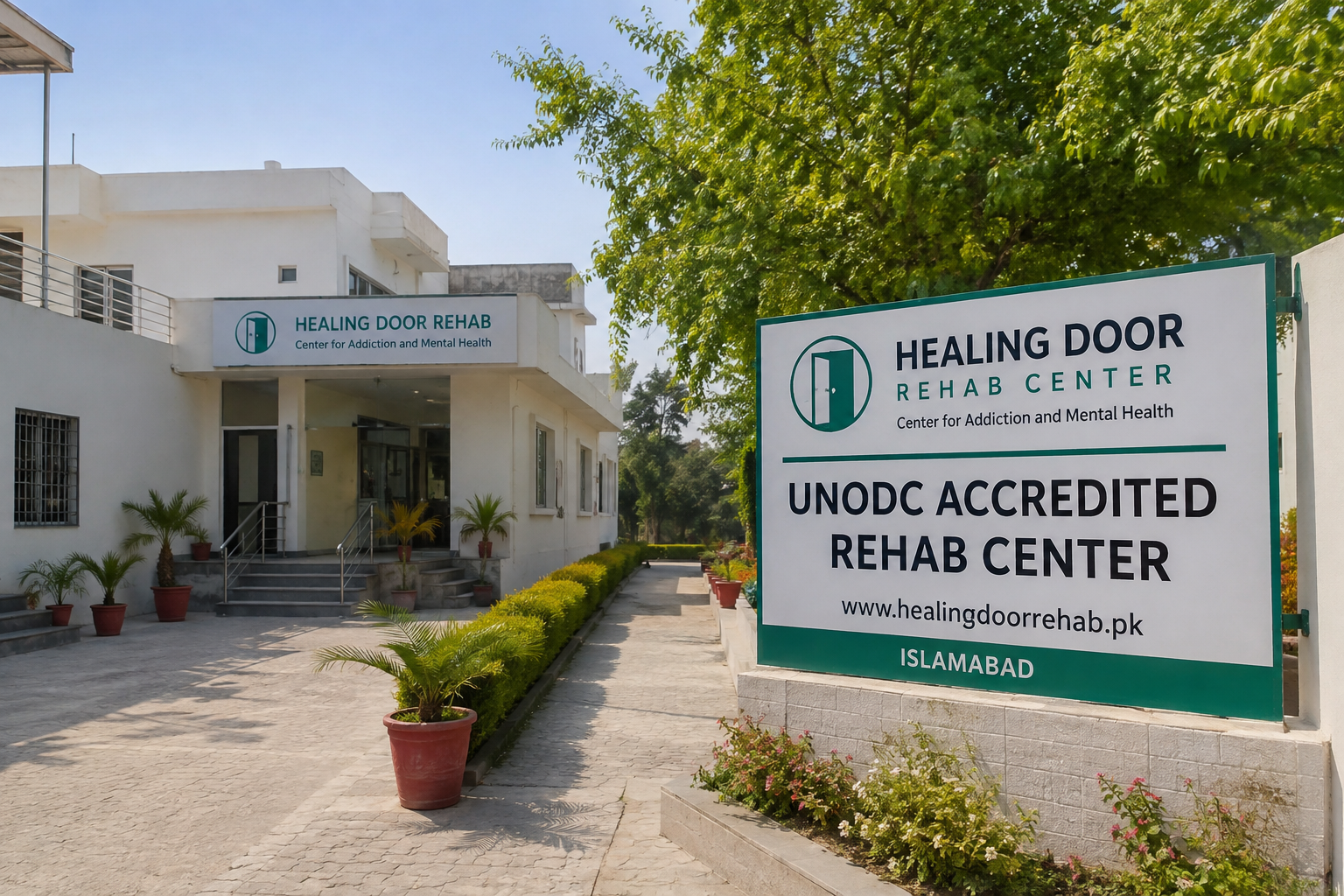
Healing Door Rehab Center: UNODC Accredited Care in Islamabad
Healing Door Rehab Center is a UNODC-accredited addiction treatment facility located in Bani Gala, Islamabad, with more than a decade of clinical experience treating substance use and co-occurring psychiatric conditions. This accreditation reflects the center’s commitment to structured, evidence-based care delivered by a qualified multidisciplinary team.
A Full Continuum of Care
Rather than offering a single, isolated service, HDRC provides a complete treatment pathway, starting with a comprehensive clinical assessment and continuing through every stage of recovery.
Medically Supervised Detoxification
For patients dependent on alcohol or drugs, the treatment process typically begins with safe, medically monitored detoxification. This stage focuses on managing withdrawal symptoms under 24/7 medical supervision, using medication support where clinically appropriate to reduce discomfort and health risks.
Structured Alcohol Abuse Treatment
For patients struggling specifically with alcohol dependency, HDRC’s alcohol abuse treatment program combines detox, individual counseling, group therapy, and relapse prevention planning into one coordinated program.
Integrated Psychiatric Care
Addiction rarely exists in isolation from mental health. Many patients struggling with substance use also face depression, anxiety, trauma-related conditions, or in some cases, substance-induced psychiatric symptoms. HDRC’s psychiatric services are fully integrated into the treatment process, allowing psychiatrists, psychologists, and addiction specialists to address both conditions together rather than treating them as separate issues handled by different providers.
A Multidisciplinary, Individualized Team
One of the clearest signs of a genuinely accredited, professional facility is a team-based approach to treatment. At HDRC, every patient’s care is overseen by a team that includes consultant psychiatrists, clinical psychologists, and medical officers, all collaborating on a single treatment plan rather than working in isolated silos. This structure allows the facility to handle complex cases — such as patients with both addiction and psychiatric conditions — safely and effectively.
Treatment plans at HDRC are built around each patient’s individual history, health status, and needs, rather than applying a generic program to every admission. This individualized approach is consistent with the standards expected of an internationally accredited facility.
A Private, Purpose-Built Environment
Located in Bani Gala, away from the busy, high-stress areas of Islamabad, HDRC’s facility offers patients a calm, private setting to focus on recovery. This kind of environment plays a meaningful role in early treatment stages, when patients are most vulnerable to stress, cravings, and outside triggers.
What to Ask When Evaluating Any Rehab Center
Whether you’re considering Healing Door Rehab Center or comparing options, it’s worth asking any facility the following questions before committing to treatment:
- Is the facility accredited, and by which body? Accreditation from a recognized organization like UNODC is a meaningful indicator of quality.
- What medical qualifications do the clinical staff hold? Detox and psychiatric care should be overseen by qualified doctors, not informal staff.
- Is detox medically supervised around the clock? Unsupervised withdrawal management can be dangerous, particularly for alcohol and certain drug dependencies.
- Does the facility address co-occurring mental health conditions? Addiction and psychiatric conditions are often linked, and treating only one can undermine long-term recovery.
- What does aftercare and relapse prevention look like? Treatment shouldn’t end abruptly at discharge; a good facility supports the transition back into daily life.
- Is patient confidentiality taken seriously? Given the stigma still attached to addiction treatment in many communities, privacy should be a clear priority.
A facility that can answer these questions clearly and confidently — as an accredited center should be able to — is generally a safer and more reliable choice than one that avoids specifics.
Why Accreditation Should Influence Your Decision
Choosing a rehab center is rarely a decision made lightly. Families are often dealing with fear, urgency, and sometimes financial strain, which can make it tempting to choose the first available option rather than carefully evaluating quality. However, addiction treatment carries real medical risk, particularly during detox, and an unaccredited or poorly run facility can do more harm than good.
UNODC accreditation offers a meaningful layer of reassurance it means a facility has been evaluated against internationally recognized standards covering safety, staff qualifications, and treatment quality, rather than relying solely on self-reported claims. For patients and families in Islamabad, this distinction can be genuinely important when choosing where to seek help.
The Risks of Choosing an Unaccredited Facility
Pakistan’s addiction treatment landscape includes a wide range of facilities, and unfortunately, not all of them operate with proper medical oversight. Some common risks associated with choosing an unaccredited or informally run rehab center include:
- Unsupervised or improperly managed detox, which can lead to serious medical complications, especially with alcohol or certain sedative withdrawal
- Untrained or unlicensed staff making clinical decisions without appropriate medical background
- No structured treatment plan, resulting in inconsistent or ineffective care
- Lack of psychiatric integration, meaning underlying mental health conditions go undiagnosed or untreated
- Poor confidentiality practices, which can discourage patients from being honest about their history and needs
- No clear aftercare or relapse prevention support, leaving patients vulnerable immediately after discharge
These risks aren’t hypothetical they’re common complaints from families who have had negative experiences with informal or poorly regulated facilities. This is precisely why accreditation matters: it provides an external check on quality that self-reported claims simply cannot replace.
How Accreditation Fits Into the Broader Treatment Journey
It’s worth remembering that accreditation is a foundation, not the entire picture. A UNODC accredited facility gives patients and families confidence that baseline standards are being met, but the actual quality of a person’s recovery experience also depends on factors like:
- How well the clinical team communicates with patients and families throughout treatment
- Whether the facility takes time to build an individualized plan rather than rushing patients through a fixed schedule
- The level of ongoing support available after formal treatment ends
- How comfortable and respected a patient feels throughout their time at the facility
At Healing Door Rehab Center, accreditation is paired with these practical, day-to-day elements of care — meaning patients don’t just benefit from meeting a standard on paper, but from a facility that has built its actual treatment culture around those same principles.
Supporting Families Through the Process
Choosing a rehab center is rarely a decision made by one person alone. Families are often deeply involved sometimes making the initial call, arranging admission, or supporting a loved one emotionally throughout treatment. A facility with genuine accreditation and a structured approach to care typically also does a better job of involving and communicating with family members, rather than treating them as outsiders to the process.
At HDRC, family counseling and involvement are built into the treatment approach wherever appropriate, recognizing that recovery is far more sustainable when a patient has support waiting for them outside the facility as well as during their stay.
A Trusted, Accredited Option in Islamabad
Healing Door Rehab Center combines UNODC accreditation with more than a decade of hands-on clinical experience, a fully integrated approach to addiction and psychiatric care, and a private, supportive treatment environment in Bani Gala, Islamabad. For families searching for a facility that meets internationally recognized standards rather than operating without oversight, this combination of accreditation and comprehensive care is a significant factor worth prioritizing.
You can learn more about the center’s clinical team, credentials, and treatment philosophy on the About Us page.
Frequently Asked Questions
What does UNODC accreditation actually verify? It verifies that a facility’s treatment protocols, staff qualifications, and safety standards have been evaluated against internationally recognized criteria for addiction treatment, rather than being based solely on the facility’s own claims.
Is UNODC accreditation the same as a government license? Not necessarily. A facility may hold local licensing requirements in addition to international accreditation. Accreditation from a body like UNODC generally reflects a higher, internationally benchmarked standard of care on top of any local regulatory requirements.
Does accreditation guarantee successful treatment outcomes? No single accreditation can guarantee outcomes, since recovery depends on many factors, including the patient’s engagement with treatment. However, accreditation significantly increases the likelihood that the facility itself is operating safely, ethically, and according to evidence-based practices.
Why does integrated psychiatric care matter for addiction treatment? Many patients with substance use disorders also have underlying or co-occurring psychiatric conditions. Treating only the addiction while ignoring an underlying psychiatric condition or vice versa often leads to poorer long-term outcomes and higher relapse risk.
Take the Next Step
If you or a loved one is looking for a UNODC accredited rehab center Islamabad Healing Door Rehab Center offers medically supervised, evidence-based care delivered by an experienced, multidisciplinary team in a private and confidential setting.
Book a confidential consultation today or call +92 314 992 2547 to learn more about admission and treatment options.