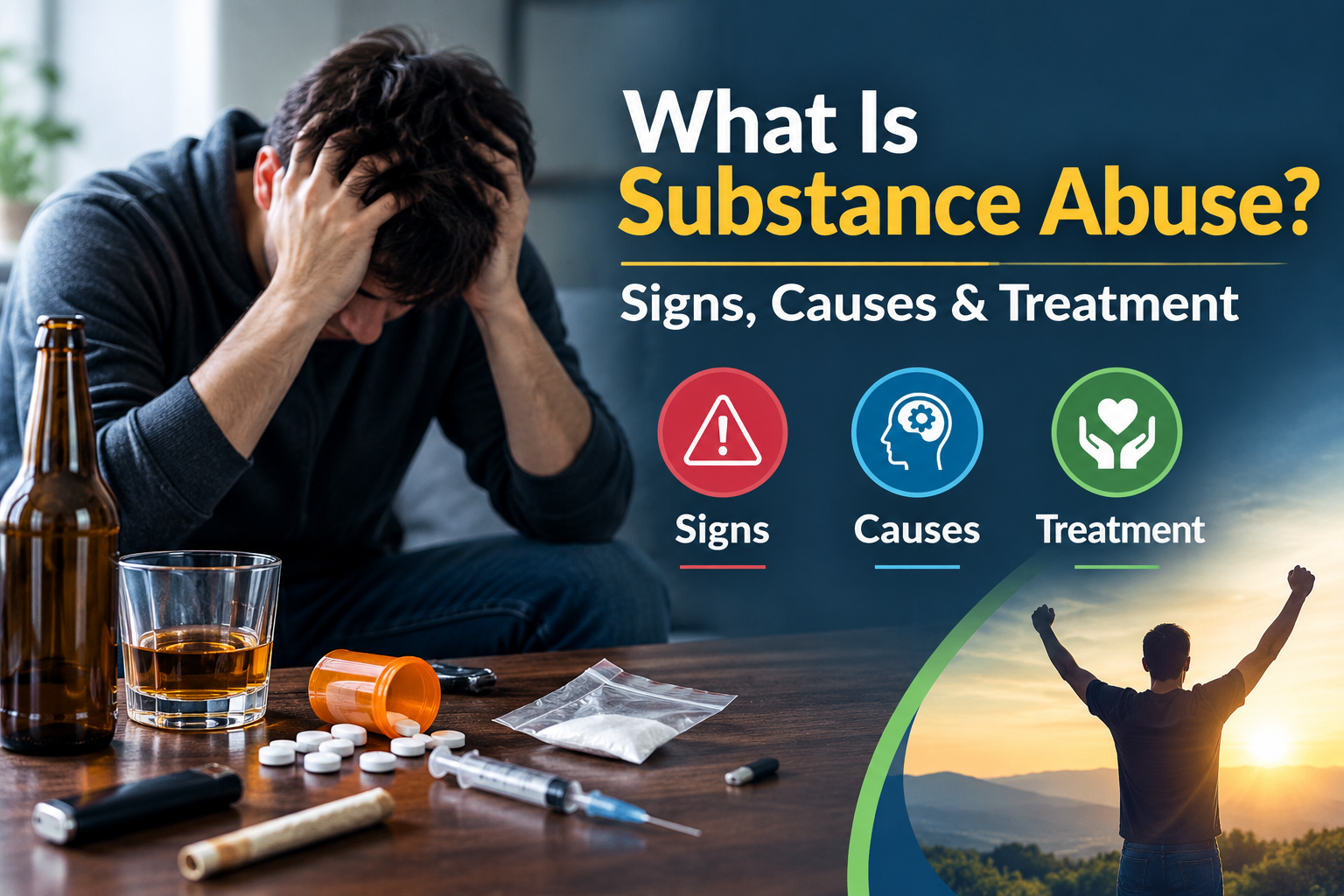
Substance abuse is a serious health concern that can affect a person’s physical health, mental well-being, relationships, education, career, and overall quality of life. It can involve the harmful or uncontrolled use of drugs, alcohol, prescription medicines, or other psychoactive substances. While occasional substance use does not automatically mean that a person has a substance use disorder, repeated use that causes significant problems or loss of control may require professional help.
Understanding what is substance abuse, its warning signs, causes, and available treatment options can help individuals and families recognize a problem earlier and seek appropriate support. Substance use disorders are treatable health conditions, and recovery can involve medical care, counseling, behavioral therapy, family support, relapse-prevention strategies, and ongoing aftercare.
If you or someone you care about is struggling with addiction, professional assessment can help determine the appropriate level of care. Healing Door Rehab & Psychiatric Center in Islamabad provides individualized addiction and mental health treatment, including assessment, medically supervised detoxification when needed, therapy, recovery planning, and aftercare.
What Is Substance Abuse?
Substance abuse generally refers to using a substance in a way that causes harm to a person’s health, behavior, relationships, work, education, or daily life. Modern healthcare commonly uses the term substance use disorder (SUD) to describe a pattern of problematic substance use associated with impaired control, cravings, continued use despite negative consequences, and other clinically significant symptoms.
Substances that can contribute to problematic use include:
- Alcohol
- Opioids
- Prescription pain medications
- Sedatives and tranquilizers
- Cocaine
- Methamphetamine or crystal meth
- Cannabis
- Certain prescription medicines when misused
- Other psychoactive substances
The effects can vary depending on the substance, amount used, frequency of use, method of consumption, and the person’s physical and psychological condition.
Substance use disorders are not simply a matter of poor willpower. WHO describes drug-use disorders as complex health conditions influenced by biological, psychological, social, and environmental factors.
Substance Abuse vs. Substance Dependence
The terms substance abuse, addiction, dependence, and substance use disorder are sometimes used interchangeably, but they can describe different aspects of problematic substance use.
A person may begin using a substance recreationally, socially, or following a prescription. With repeated use, however, some people develop tolerance, cravings, withdrawal symptoms, or difficulty controlling their consumption.
Substance dependence can involve physical or psychological adaptation to a substance. A person may experience withdrawal when they reduce or stop using it.
Substance use disorder is a broader clinical concept involving problematic patterns of substance use that lead to significant impairment or distress.
Recognizing the problem early can make it easier to connect someone with appropriate treatment.
Common Signs of Substance Abuse
The signs of substance abuse can be physical, behavioral, emotional, social, and psychological. Not everyone will experience the same symptoms, and one isolated sign does not necessarily indicate addiction.
1. Increased Tolerance
A person may gradually need more of a substance to experience the effects they previously achieved with a smaller amount.
Increasing tolerance can be an indication that the body has adapted to repeated substance exposure.
2. Strong Cravings
Cravings are intense urges to use a substance. Someone may spend considerable time thinking about obtaining or using the substance even when they recognize that it is causing problems.
3. Difficulty Controlling Use
A person may intend to use a substance occasionally but repeatedly use more than planned or for longer periods than intended.
Difficulty reducing or stopping use can be an important warning sign.
4. Neglecting Responsibilities
Substance abuse can interfere with work, education, household responsibilities, and relationships.
For example, someone may frequently miss work, perform poorly at school, or fail to complete important responsibilities because of substance use.
5. Changes in Behavior
Family members may notice sudden changes in personality, routines, social circles, or behavior.
Possible changes include:
- Increased secrecy
- Irritability
- Withdrawal from family
- Loss of interest in normal activities
- Unexplained financial problems
- Changes in sleep patterns
- Sudden changes in friends or social groups
6. Physical Changes
Depending on the substance, physical symptoms may include changes in appetite, sleep, coordination, appearance, energy levels, or general health.
Some people may also experience withdrawal symptoms when they stop or reduce substance use.
7. Continued Use Despite Problems
One of the most concerning signs is continuing to use a substance despite knowing that it is causing health, relationship, financial, educational, or occupational problems.
This pattern may indicate that professional assessment is needed.
Causes of Substance Abuse
There is no single cause of substance abuse. Multiple factors can contribute to the development of problematic substance use.
Genetics and Biology
Some people may have biological or genetic factors that increase their vulnerability to developing substance-related problems.
Genetics alone does not determine whether someone will develop addiction, but it can interact with environmental and behavioral factors.
Mental Health Conditions
Depression, anxiety, trauma-related problems, psychosis, and other mental health conditions can occur alongside substance use disorders.
Some individuals may use substances as an attempt to cope with emotional distress. However, substance use can potentially worsen psychological symptoms and create additional health problems.
This is why professional assessment can be important when substance use and mental health concerns occur together.
Stress and Trauma
Severe or prolonged stress, traumatic experiences, family difficulties, and other adverse life experiences can contribute to unhealthy coping patterns.
Learning healthier coping strategies through counseling and behavioral therapy can be an important part of recovery.
Peer Pressure
Friends, social environments, and community influences can affect substance-use behavior.
People may begin using a substance because it is common within their social group or because they feel pressure to participate.
Easy Access to Substances
Availability and accessibility can influence patterns of substance use. When potentially addictive substances are easily available, the opportunity for repeated use may increase.
Family and Environmental Factors
Family conflict, unstable living conditions, lack of social support, and other environmental challenges can contribute to vulnerability.
At the same time, supportive families and healthy social connections can become valuable sources of encouragement during recovery.
Effects of Substance Abuse
Substance abuse can affect almost every area of life.
Physical Health
Depending on the substance, prolonged or harmful use may affect the heart, brain, liver, lungs, nervous system, immune system, and other organs.
Substance use can also increase the risk of accidents, injuries, overdose, and other medical complications.
Mental Health
Substance use can be associated with anxiety, depression, mood changes, irritability, impaired concentration, paranoia, or other psychological problems.
The relationship can work in both directions: mental health difficulties may contribute to substance use, while substance use may worsen existing psychological symptoms.
Family and Relationships
Addiction can create conflict and reduce trust between family members.
Partners, parents, children, and other loved ones may experience emotional and financial stress when someone is struggling with addiction.
Education and Employment
Frequent substance use can interfere with concentration, attendance, productivity, and decision-making.
Over time, these problems can affect academic performance and employment.
Financial Problems
Money may be spent on obtaining substances, while work-related problems may reduce income.
WHO notes that substance use can contribute to health, social, legal, and financial problems.
How Is Substance Abuse Treated?
Treatment depends on the substance involved, severity of the problem, withdrawal risks, physical health, mental health, previous treatment history, and individual circumstances.
There is no single treatment method that works for every person. WHO/UNODC treatment standards emphasize evidence-based, individualized approaches and appropriate treatment settings.
Common components of treatment can include the following.
1. Assessment and Evaluation
Treatment often begins with a comprehensive assessment.
Healthcare professionals may evaluate:
- Substance-use history
- Physical health
- Mental health
- Withdrawal risks
- Family and social circumstances
- Previous treatment
- Relapse history
- Individual recovery goals
A detailed assessment helps determine the appropriate treatment plan.
2. Medical Detoxification
Some people require medically supervised detoxification before continuing with rehabilitation.
Detox focuses on managing withdrawal and maintaining safety as the substance leaves the body.
Detox alone is not usually the entire recovery process. Continued treatment may be needed to address psychological, behavioral, and social factors associated with substance use.
Healing Door’s drug detoxification program provides medically supervised detoxification when clinically appropriate.
3. Individual Therapy
Individual counseling allows patients to discuss personal challenges, triggers, emotions, behaviors, and recovery goals in a confidential setting.
Therapy can help people identify unhealthy patterns and develop healthier coping strategies.
4. Group Counseling
Group therapy can provide an environment where individuals share experiences and learn from others facing similar challenges.
It may also help reduce isolation and encourage accountability.
5. Family Counseling
Addiction affects families as well as individuals.
Family counseling can help relatives understand substance use, improve communication, establish healthy boundaries, and support recovery.
6. Psychiatric Support
Some people experience mental health conditions alongside substance use disorders.
When appropriate, psychiatric care can help address co-occurring mental health concerns as part of a comprehensive treatment plan.
Healing Door Rehab provides addiction and psychiatric services designed around individual clinical needs. Its treatment team includes psychiatrists, psychologists, therapists, medical professionals, and addiction-care specialists.
7. Relapse Prevention
Recovery does not necessarily end when a person stops using a substance.
Relapse-prevention planning can help individuals identify triggers, manage cravings, recognize warning signs, and develop strategies for challenging situations.
Learning how to respond to stress and high-risk situations is an important part of long-term recovery.
8. Aftercare and Continuing Support
Aftercare can provide ongoing support following a rehabilitation program.
Depending on individual needs, aftercare may involve counseling, follow-up appointments, family support, support groups, and relapse-prevention planning.
Healing Door describes recovery as extending beyond detox through therapy, family support, relapse-prevention planning, and aftercare according to individual treatment needs.
Inpatient vs. Outpatient Substance Abuse Treatment
Both inpatient and outpatient treatment can be appropriate depending on a person’s clinical needs.
Inpatient Treatment
Inpatient rehabilitation provides a structured environment where patients stay at a treatment facility and receive ongoing support.
It may be considered when someone requires a higher level of supervision, structured care, or separation from an environment associated with substance use.
Outpatient Treatment
Outpatient treatment allows suitable patients to attend scheduled treatment sessions while continuing to live at home.
The appropriate treatment setting should be determined through professional assessment rather than choosing a program based solely on convenience.
When Should Someone Seek Professional Help?
Professional help should be considered when substance use is becoming difficult to control or is affecting health, relationships, work, education, finances, or daily responsibilities.
Warning signs include:
- Repeated unsuccessful attempts to stop
- Strong cravings
- Frequent intoxication
- Withdrawal symptoms
- Increasing tolerance
- Family conflict related to substance use
- Problems at work or school
- Continued use despite health problems
- Relapse after previous attempts to quit
- Risky behavior while under the influence
Early support may help prevent the problem from becoming more severe.
How Can Families Support Someone With Addiction?
Families can play an important role in recovery.
Instead of using shame, threats, or criticism, relatives can encourage the person to speak with a qualified healthcare professional.
Helpful approaches may include:
- Listening without unnecessary judgment
- Encouraging professional assessment
- Supporting attendance at treatment
- Learning about addiction and recovery
- Setting appropriate boundaries
- Avoiding enabling behaviors
- Encouraging healthy routines
- Participating in family counseling when recommended
It is also important for family members to look after their own emotional well-being.
Can Substance Abuse Be Treated Successfully?
Yes. Substance use disorders are treatable health conditions, although recovery can be a long-term process.
Treatment may involve several stages and may need to change over time. Some people require detoxification, while others may benefit from outpatient therapy, residential rehabilitation, medication-assisted treatment where clinically appropriate, counseling, or continuing recovery support.
WHO and UNODC emphasize that treatment should be evidence-informed and tailored to individual needs rather than relying on one universal approach.
Recovery is not simply about stopping substance use for a short period. It can also involve rebuilding relationships, improving mental and physical health, developing coping skills, preventing relapse, and creating a sustainable lifestyle.
Get Professional Help for Substance Abuse
Understanding what is substance abuse, its signs, causes, and treatment options is an important first step toward getting help.
If substance use is affecting your health, relationships, work, education, or daily life, consider speaking with a qualified healthcare professional or addiction specialist. A professional assessment can help identify the level of care that may be appropriate.
Healing Door Rehab & Psychiatric Center in Islamabad provides personalized addiction and rehabilitation services, including assessment, medically supervised detoxification when needed, individual and group therapy, family counseling, relapse-prevention support, and aftercare. The center is based in Bani Gala, Islamabad.
Seeking help is not a sign of weakness. Addiction can involve complex biological, psychological, and environmental factors, and professional treatment can provide structured support for recovery.
Final Thoughts
Substance abuse can affect the body, mind, family, career, and quality of life, but help is available. Recognizing warning signs such as cravings, increasing tolerance, loss of control, withdrawal, and continued substance use despite negative consequences can encourage earlier intervention.
Treatment may include assessment, detoxification, therapy, psychiatric care, family support, relapse prevention, and aftercare. Because every person’s circumstances are different, treatment should be individualized and guided by qualified healthcare professionals.
If you or a loved one is struggling with drug or alcohol addiction, reaching out for professional support can be an important step toward recovery and a healthier future.