
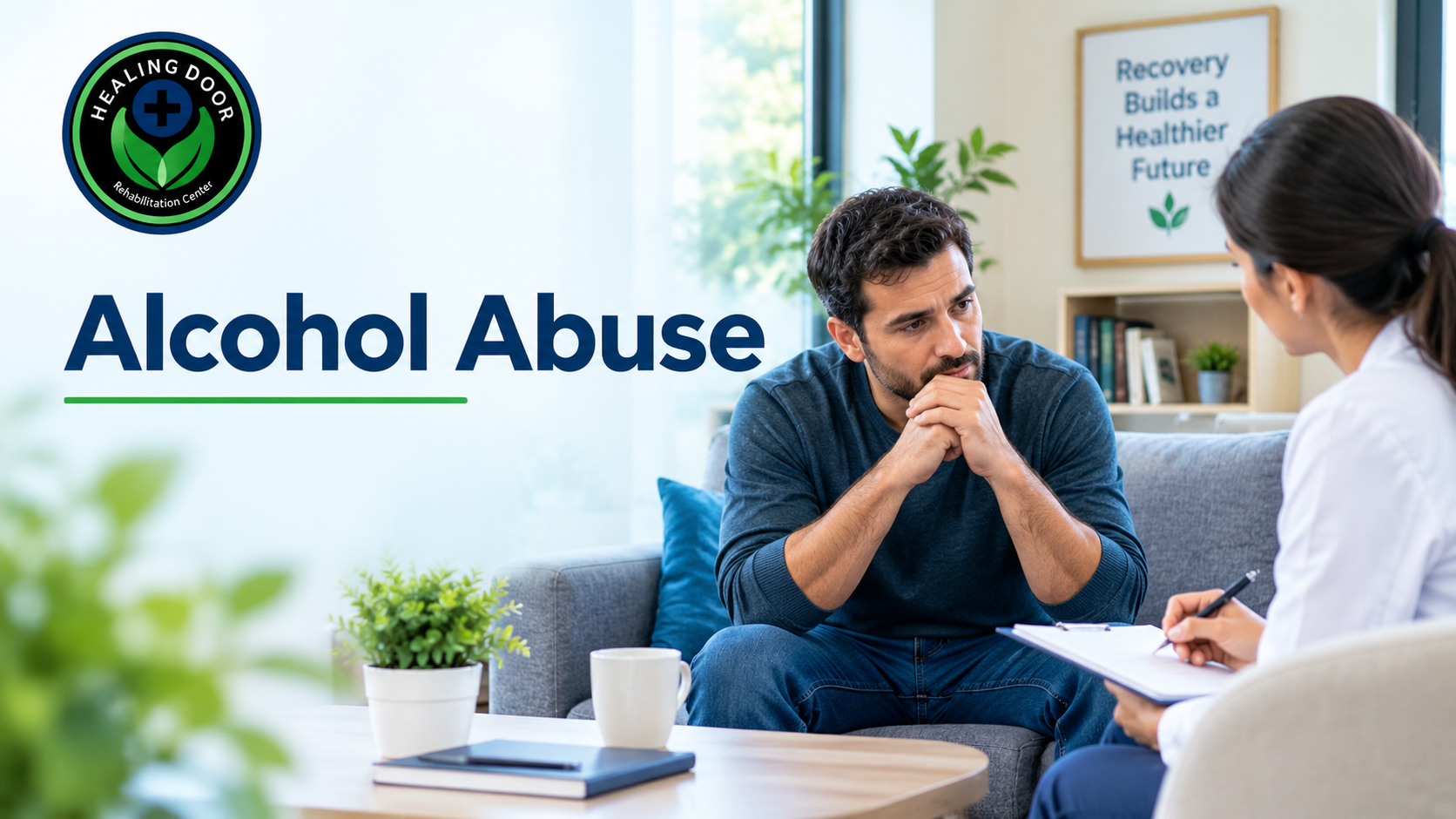
Alcohol abuse is one of the most common, yet often overlooked, forms of substance misuse. Because alcohol is legal and widely socially accepted, many people struggle to recognize when regular drinking has crossed into a pattern that requires professional help. This guide explains what alcohol abuse actually is, how it differs from alcohol dependency, the health risks involved, and how Healing Door Rehab Center (HDRC) supports patients through structured, medically informed treatment in Islamabad.
What Is Alcohol Abuse?
Alcohol abuse refers to a pattern of drinking that leads to significant negative consequences in a person’s life physically, socially, financially, or professionally without necessarily involving the physical dependence seen in alcohol addiction. A person who abuses alcohol may not experience withdrawal symptoms when they stop drinking, but their drinking still causes real harm: missed work, strained relationships, risky behavior, or health problems.
Over time, alcohol abuse can progress into alcohol dependence, where the body becomes physically reliant on alcohol and withdrawal symptoms occur when drinking stops. Recognizing and addressing abuse early before it develops into full dependency can make treatment significantly more manageable.
Signs of Alcohol Abuse
Alcohol abuse can look different from person to person, but common signs include:
- Drinking more, or more often, than intended
- Continuing to drink despite negative consequences at work, home, or in relationships
- Drinking in situations where it’s physically dangerous, such as before driving
- Using alcohol to cope with stress, anxiety, or difficult emotions
- Neglecting responsibilities or hobbies in favor of drinking
- Family or friends expressing concern about drinking habits
- Legal problems related to alcohol use, such as DUIs or public intoxication
If several of these patterns feel familiar, it may be worth having an honest conversation with a healthcare professional, even if physical dependence isn’t yet part of the picture.
Alcohol Abuse vs. Alcohol Dependence
Understanding the difference between these two terms matters because it affects the right approach to treatment.
Alcohol abuse typically involves harmful drinking patterns and negative consequences, without significant physical dependence. Treatment often focuses on behavioral change, counseling, and addressing the underlying reasons behind the drinking pattern.
Alcohol dependence (or alcohol use disorder) involves physical tolerance and withdrawal symptoms when drinking stops. This typically requires medically supervised detoxification before therapy can be effective, since withdrawal from alcohol can be physically dangerous without proper medical oversight.
Many people move along a spectrum between these two states over time, which is why early intervention before abuse progresses into dependence is so valuable.
The Health Risks of Ongoing Alcohol Abuse
Left unaddressed, alcohol abuse can lead to a wide range of physical and mental health consequences, including:
- Liver damage, including fatty liver disease, hepatitis, and eventually cirrhosis
- Increased risk of heart disease and high blood pressure
- Weakened immune system function
- Digestive problems, including pancreatitis
- Increased risk of certain cancers
- Worsening of underlying mental health conditions, including anxiety and depression
- Higher risk of accidents and injuries
Beyond the physical risks, alcohol abuse often takes a significant toll on relationships, work performance, and overall quality of life consequences that can be just as important to address as the physical health impacts.
Why Professional Treatment Matters
Many people attempt to cut back or quit drinking on their own, only to find themselves returning to old patterns during stressful periods. This isn’t a failure of willpower it reflects how deeply ingrained alcohol can become as a coping mechanism, and how difficult it is to change that pattern without structured support.
Professional treatment addresses alcohol abuse from multiple angles:
- Medical evaluation, to assess overall health and determine whether detox is necessary
- Individual counseling, to explore the emotional and behavioral patterns behind drinking
- Group therapy, offering peer support and shared accountability
- Family involvement, since alcohol abuse often affects the whole household, not just the individual
- Relapse prevention planning, equipping patients with practical strategies for high-risk situations
Alcohol Abuse Treatment at Healing Door Rehab Center
HDRC offers a structured alcohol abuse treatment program in Bani Gala, Islamabad, designed to address both the behavioral patterns behind drinking and, where necessary, the physical aspects of alcohol dependence.
A Full Continuum of Care
Rather than offering counseling in isolation, HDRC’s program is built around a complete pathway from initial assessment through detox where needed, therapy, and long-term relapse prevention. This means patients don’t have to navigate between disconnected providers at different stages of recovery.
Integrated Psychiatric Support
Alcohol abuse often overlaps with underlying mental health conditions such as anxiety, depression, or trauma-related concerns — sometimes as a cause of drinking, sometimes as a consequence of it. HDRC’s psychiatric services team works alongside addiction specialists to address both issues together, rather than treating alcohol use as a standalone problem.
Individualized, Not Templated Treatment
Every patient’s relationship with alcohol is different, shaped by personal history, mental health, and life circumstances. HDRC’s clinical team conducts a thorough assessment before building a treatment plan, ensuring the approach fits the individual rather than applying a fixed program to everyone.
An Accredited, Experienced Team
Healing Door Rehab Center is a UNODC-accredited facility with more than a decade of clinical experience treating alcohol-related and psychiatric conditions in Islamabad. Our multidisciplinary team includes psychiatrists, psychologists, and medical officers who collaborate on every case. Learn more about our clinical approach on the About Us page.
How Alcohol Abuse Develops Over Time
Alcohol abuse rarely appears overnight. For most people, it develops gradually, often beginning as an occasional coping mechanism for stress, social anxiety, or difficult emotions. What starts as having a drink to unwind after a hard day can slowly shift into needing that drink to feel normal, or drinking becoming the default response to any kind of discomfort.
This gradual progression is part of why alcohol abuse can be so difficult to recognize in oneself. Because the pattern builds slowly, many people don’t notice how much their relationship with alcohol has changed until consequences — missed responsibilities, relationship strain, or health concerns — start to accumulate. Friends and family members are often the first to notice changes, sometimes well before the person themselves is ready to acknowledge a problem.
The Role of Mental Health in Alcohol Abuse
Alcohol abuse and mental health are frequently intertwined, and understanding this connection is an important part of effective treatment. Some people turn to alcohol as a way to manage underlying anxiety, depression, or unresolved stress, using it as a form of self-medication. Over time, this can create a cycle: alcohol temporarily eases distress, but its longer-term effects on mood, sleep, and brain chemistry often worsen the very symptoms a person was trying to escape.
In other cases, alcohol abuse itself contributes to the development of mental health symptoms — affecting mood regulation, sleep quality, and overall emotional stability. Because this relationship can run in either direction, treatment that only addresses the drinking without considering mental health, or vice versa, often falls short. This is a key reason why integrated psychiatric support is such an important part of comprehensive alcohol abuse treatment.
Why Early Intervention Makes a Difference
One of the most important things to understand about alcohol abuse is that earlier intervention tends to be significantly easier than waiting until the pattern has become deeply entrenched. In the earlier stages of abuse, before physical dependence develops, treatment can often focus primarily on behavioral and psychological change — without the added complexity of managing withdrawal.
Waiting until alcohol abuse progresses into full dependence typically means a longer, more complex treatment process, involving medical detox before any behavioral work can meaningfully begin. This is part of why professionals encourage people not to wait for a “rock bottom” moment before seeking help — addressing concerning patterns early, even before consequences become severe, tends to lead to better outcomes overall.
Common Misconceptions About Alcohol Abuse
“I don’t drink every day, so I don’t have a problem.” Alcohol abuse isn’t only defined by frequency — binge drinking, drinking in risky situations, or drinking despite negative consequences all count as abuse, even if it doesn’t happen daily.
“I can handle it on my own.” While some people do reduce their drinking independently, many find that lasting change requires addressing the underlying reasons behind the behavior — something professional counseling is specifically designed to help with.
“Treatment is only for people who are physically dependent on alcohol.” Addressing alcohol abuse early, before physical dependence develops, is often easier and more effective than waiting until the pattern has become more entrenched.
“Admitting I have a problem means I’m weak.” Alcohol abuse is a behavioral and sometimes medical pattern shaped by many factors — stress, mental health, social environment, and biology among them. Seeking help reflects self-awareness, not weakness.
Supporting a Loved One Struggling with Alcohol Abuse
Families and friends often aren’t sure how to bring up concerns about someone’s drinking without causing conflict. A few general principles can help:
- Choose a calm moment to talk, rather than during or right after drinking
- Focus on specific behaviors and how they’ve affected you, rather than general accusations
- Avoid enabling patterns, such as making excuses for missed responsibilities
- Encourage professional support rather than trying to manage the situation alone
- Be patient, since change often takes time and may involve setbacks
What to Expect When Reaching Out for Help
For many people, the hardest part of addressing alcohol abuse is simply making the first phone call or scheduling the first appointment. Understanding what that first step actually looks like can make it feel less intimidating.
Typically, the process begins with a confidential conversation about your drinking patterns, general health, and any concerns you or your family have noticed. This isn’t about judgment — it’s about gathering the information needed to determine the right level of support, whether that’s outpatient counseling, a more structured program, or medical evaluation for possible dependence. From there, a treatment plan is built around your specific situation, rather than a one-size-fits-all approach applied to every patient who walks through the door.
Frequently Asked Questions
How do I know if my drinking counts as “abuse” rather than just casual drinking? If your drinking is causing negative consequences — in relationships, at work, financially, or physically — and continues despite those consequences, it’s worth discussing with a professional, regardless of how often you drink.
Does alcohol abuse always require detox? Not necessarily. Detox is typically needed when physical dependence has developed. For alcohol abuse without significant physical dependence, treatment often focuses more on counseling and behavioral change.
Can alcohol abuse be treated without inpatient care? Depending on severity, some patients benefit from outpatient counseling, while others — particularly those at risk of progressing toward dependence — may benefit from more structured, inpatient-level support.
How does HDRC handle privacy for alcohol treatment? Confidentiality is treated as a core priority throughout the assessment and treatment process, given the stigma that can still surround alcohol-related concerns.
Take the First Step
Alcohol abuse doesn’t have to progress into a more serious problem before it’s worth addressing. Healing Door Rehab Center offers confidential, professional support for alcohol abuse in Islamabad, tailored to where you are in your relationship with alcohol.
Book a confidential consultation today or call +92 314 992 2547 to speak with our team.